
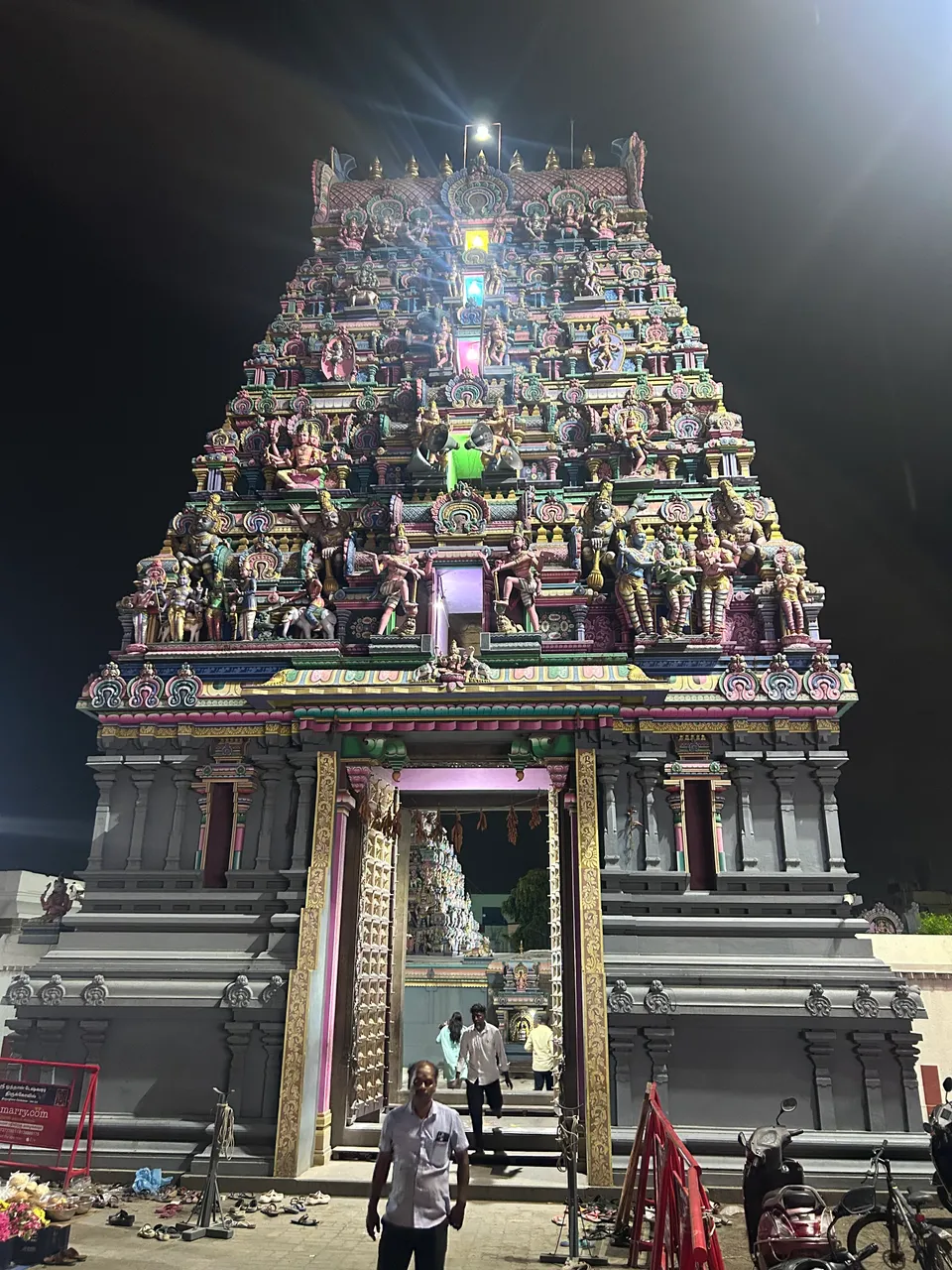
Sri Othandeswarar Temple
Tiruvallur, Tamil Nadu
Shiva temple at Thirumazhisai near Chennai, where the Lingam bears the mark of a sword cut and Nataraja and the goddess face each other with Nandi between them.
- Shiva
- Parvati
- Vinayagar (Ganesha)
Also known as: Arulmigu Sri Periyandavar Temple · Thirunilai Periyandavar Kovil · Thirunilai Periyandavar Temple
A Swayambhu Shiva shrine at Thirunilai village near Thirukazhukundram, where Shiva is worshipped as Periyandavar. Known as a parigara sthalam for couples praying for childbirth.
Chengalpattu, Tamil Nadu
Sri Periyandavar Temple stands in the open countryside of Thirunilai village, Chengalpattu district, between a pond on its north and a lake on its south. The presiding deity is a Swayambhu (self-manifested) Lingam worshipped as Periyandavar, with Sri Angala Parameswari beside him.
The village lies about 8 km from the Vedagiriswarar temple at Thirukazhukundram, about 14 km east of Chengalpattu and about 12 km west of Thiruporur. The temple is especially known as a place to pray for the blessing of children.
21 Sivaganas, formed as clay figures, stand in a rectangle around the Swayambhu Lingam in worship — an arrangement the temple describes as found nowhere else.
Devotees perform the Sivagana pooja by shaping 21 balls of earth, arranging them before the deity and offering abhishekam and camphor aarti to each.
Devotees may perform abhishekam to Vibhuti Vinayagar themselves with sacred ash, believed to bring wealth, learning and wisdom.
The temple is a parigara sthalam for childbirth; families whose prayers are answered offer thulabharam.
A jyothi (lamp) is lit every full-moon (Pournami) evening.
The temple is in Thirunilai village of Chengalpattu taluk, in the area of the old Kanchipuram district, about 8 km north-east of the Thevaram-sung Vedagiriswarar temple at Thirukazhukundram. Its origins are recorded only in temple tradition (see the traditional account).
This section records tradition as it is told. It is not presented as independently verified history.
According to the temple tradition, the asura Sundarabhadran had won a boon that he could be killed only by one embodying both Shiva and Shakti, and he troubled Indra and the devas. Under a curse of Shakti, Shiva took a human form and wandered the world without rest.
Parvati hurled her trident (soolam), which came to rest at this spot; 21 clods of earth scattered where it fell and became Sivaganas awaiting the Lord. Drawn by the trident's light, Shiva stopped and stood firmly here. Parvati named him Periyandavar — the great Lord who walked the world as a man, born without a mother's womb — and asked that he grant children to childless couples who remember him here. Shiva named the place Thirunilai and the goddess Thirunilai Nayagi.
Tradition also tells of a childless couple who were guided here in a dream by Shiva, led to the spot by a boar, and were blessed with a son a year later. Many centuries ago Shiva is said to have appeared here as a flame of light, and the Swayambhu Lingam was installed and worshipped in that open ground.
Sri Periyandavar (Shiva) as a Swayambhu Lingam is the presiding deity; above the Lingam he is depicted in human form, seated. Sri Angala Parameswari, who halted the wandering Shiva with her trident, is on the right of the Lingam, and Shiva and Shakti are seen together here. Parvati is worshipped here as Thirunilai Nayagi.
Other deities include Thala Vinayagar and Murugan at the entrance, Vibhuti Vinayagar in the 16-pillared mandapam, the 21 Sivaganas around the Lingam, and Nagathamman.
The temple faces east, with a pond on its north side and a lake on its south.
The temple is open daily from 6:00 am to 8:00 pm, with no midday closure.
Left of the entrance.
Right of the entrance; six faces, twelve arms, seated on a peacock.
Facing the entrance of the 16-pillared mandapam. Devotees may perform abhishekam with sacred ash themselves.
To the right of the Swayambhu Lingam.
Twenty-one clay Sivaganas arranged in a rectangle around the Swayambhu Lingam, shown in worship.
On the path to the Sitthamirtha Kulam on the north side, flanked by Vinayagar and Murugan.
Special abhishekam, archanai and aarti from 5 pm on every full-moon day, followed by annadhanam. A jyothi is lit each Pournami.
Special abhishekam and pooja every Sunday evening.
Devotees shape 21 balls of earth, arrange them in a rectangle before the deity, and offer abhishekam and camphor aarti to each, after preparing kalasams for Periyandavar and Angala Parameswari.
Devotees themselves bathe Vibhuti Vinayagar in sacred ash, praying for wealth, learning and wisdom.
Families whose prayers for a child were answered offer thulabharam.
Special pooja on 1 January.
Begins around 4 pm with Thevaram singing; around 6 pm Periyandavar and Angala Parameswari, in special alankaram, are taken in procession around the temple streets.
Special pooja on the first day of Chithirai.
Held every year on 12 September: Periyandavar and Angala Parameswari appear in special alankaram and receive milk abhishekam.
Annabhishekam (rice offering) on Aippasi Pournami.
Special Karthigai Deepam celebration in the Tamil month of Karthigai.
Festival dates follow the Tamil calendar, so they change every year.
No licensed photographs have been published for this temple yet.
Tiruvallur, Tamil Nadu
Shiva temple at Thirumazhisai near Chennai, where the Lingam bears the mark of a sword cut and Nataraja and the goddess face each other with Nandi between them.